
 Car & CleaningElectric Pressure WasherWhat to look for

Car & Cleaning
Portable Tyre Inflator
Flow rate, duty cycle, gauges, leads and shut off explained for 12 volt and battery tyre inflators used on cars, bikes and trailers.
See prices on Amazon
Price and availability are shown on Amazon and can change. As an Amazon Associate we earn from qualifying purchases.
Tyres lose a little pressure all the time, and an inflator kept in the boot saves a hunt for a working air hose. Corded units draw from a 12 volt socket or clip to the battery, while cordless ones carry their own pack.
What to look for
- Flow: litres per minute sets the pace, and large four wheel drive tyres need far more than a hatchback.
- Duty cycle: this tells how long it may run before resting to cool.
- Preset stop: set a target in psi or kPa and the pump switches off by itself.
- Power draw: larger compressors exceed what many accessory sockets supply, so battery clamps are used.
- Reach: add up cord and air hose to see that the far rear wheel is covered.
Who it suits
Commuters, touring families, cyclists and beach drivers who air down on sand. Frequent outback trips may justify a heavier twin cylinder compressor.
Before you buy
- Follow the pressures on the tyre placard, measured cold, instead of the maximum on the sidewall.
- Compare the built in gauge with a separate one, as small gauges can read high or low.
- Stay with the pump while it runs, keep fingers off hot fittings, wear ear protection if it is loud, and have a tyre that keeps losing air repaired or replaced.
You may also want
All Car & CleaningCar & CleaningElectric Pressure WasherWhat to look for 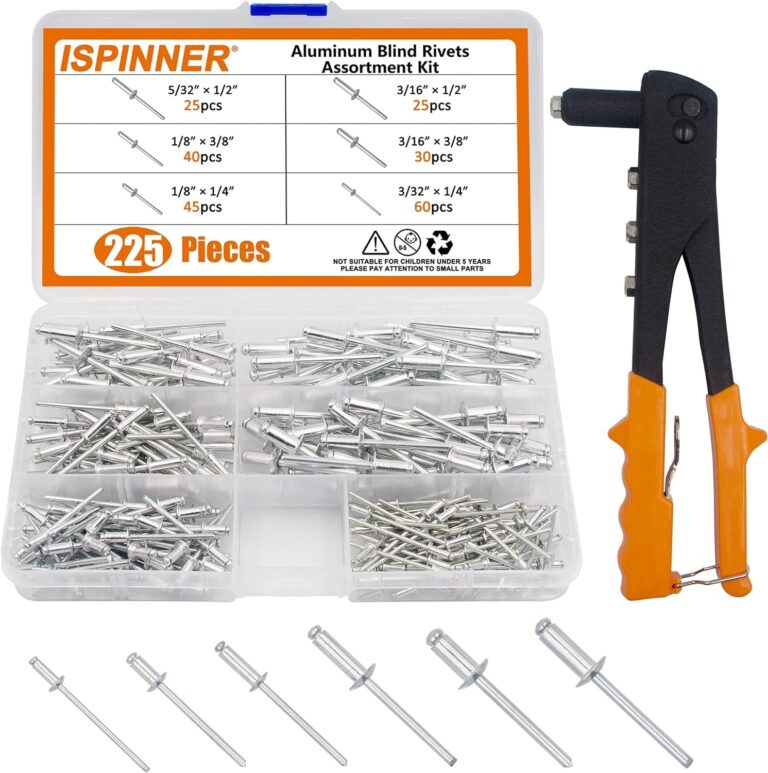 Hand ToolsISPINNER 225 Piece Blind Rivet Kit with Hand RiveterSee details
 Safety & WorkwearMechanics Work GlovesWhat to look for
 Glues & SealantsNeutral Cure Silicone SealantWhat to look for